What's Your Number?
What Your Age Really Tells You
What does a 62-year-old look like?
Take a second and picture someone in your mind.
What did you see? Gray hair? Retired? Slowing down? Grandchildren?
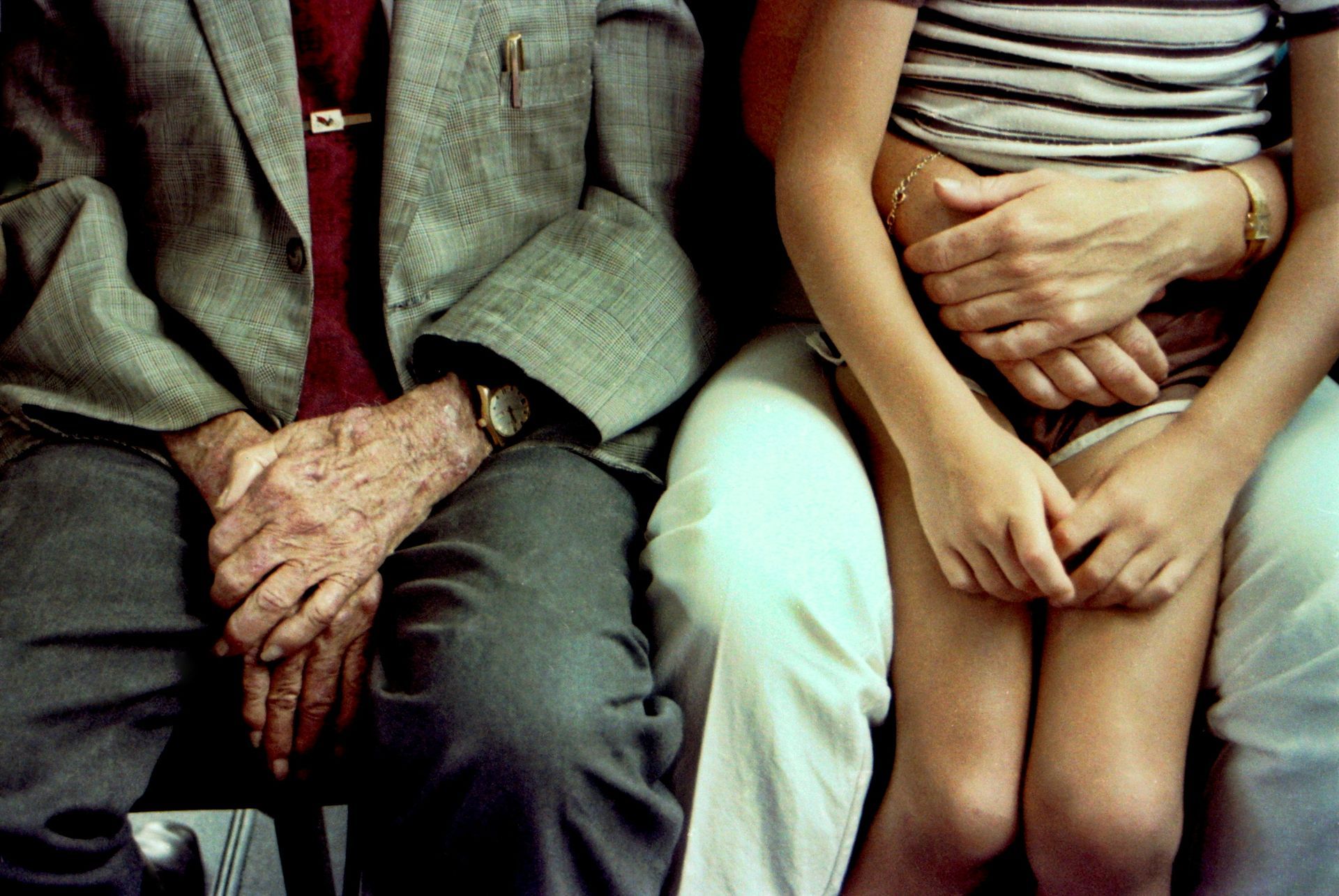
Now imagine five photographs of five different 62-year-olds. They are the same chronological age, but they have different bodies, careers, lifestyles, health histories, and energy levels.
So, which one looks 62?
All of them do.
Because there isn’t one way to be 62—and that is exactly why we need to change the way we talk about aging.
Two Women, Both 62
I had an experience recently that brought this home for me.
I was getting ready to go on vacation and asked my neighbor if she would mind watering my plants while I was away. She declined and explained that she wasn’t comfortable navigating the six steps leading up to my deck.
Then she said something like, “You know, I’m 62.”
And I thought: Wait. What? I’m 62!
I have to admit, I was surprised. Based on our previous interactions, I had assumed she was probably in her late 70s.
There I was, making an assumption about age—the very thing I tell other people not to do.
But it was such an interesting moment. Here we were: two women, neighbors, exactly the same chronological age. Yet our physical abilities and our experiences of being 62 were very different.
To be clear, neither experience is the “right” way to be 62. And you cannot know someone’s full story from one observation—or from the number of candles on her birthday cake.
The Older We Get, the More Different We Become
This is something gerontologists have understood for a long time: as we grow older, we don’t become more alike. In many ways, we become more different.
Think about everything that accumulates over 60, 70, or 80 years:
- Health histories
- Relationships
- Careers
- Losses and opportunities
- Education
- Environments
- Genetics
- Habits
- Financial circumstances
- Experiences and choices
All of these things contribute to who we are today.
That is why you will sometimes hear people who work in aging say, “If you’ve met one older adult, you’ve met one older adult.”
Yet our society loves to place people into age categories: “seniors,” or worse, “the elderly”—as if millions of wonderfully different human beings suddenly become one homogeneous group when they reach a particular birthday.
Imagine doing that with other age groups. So why do we accept it after 65?
What Chronological Age Can—and Cannot—Tell Us
Chronological age tells us one thing very accurately: how many years we have been alive.
That’s it.
It doesn’t tell me how strong you are or how well you move. It doesn’t tell me whether you can climb six steps, how well you sleep, or how much energy you have. It doesn’t reveal your cognitive health, the quality of your relationships, or whether you wake up with a sense of purpose.
And it certainly doesn’t tell me what you are capable of doing next.
That is where the conversation about healthspan becomes so important.
Lifespan asks: How long will I live?
Healthspan asks: How well can I live during those years?
And that is what really matters.
You Don’t Need an Expensive Test to Pay Attention
You may also have heard people talking about biological age. Chronological age is simply the number of years you have been alive. Biological age attempts to describe how your body is aging physiologically.
There are sophisticated tests that examine biomarkers and epigenetic changes. But most of us don’t need an expensive test to begin paying attention to how we are functioning.
We can start with practical questions:
- Can I comfortably climb a flight of stairs?
- How quickly and confidently do I walk?
- Can I rise from a chair without using my arms?
- Can I get down onto the floor and get back up?
- How is my balance? Can I stand on one leg?
- Am I maintaining muscle and grip strength?
- Can I carry my own groceries?
- How well am I sleeping?
- How much energy do I have?
- And I would go beyond physical health:
- Do I have something that gives me a reason to get up in the morning?
- Am I engaged with life?
- Do I have meaningful relationships?
- Is there something I am looking forward to?
Together, our answers tell us something much more useful than our chronological age: How am I functioning in the life I am living right now?
They also lead us to an even more important question: Where might I want to invest in my future self?
I recently listened to ageism activist Ashton Applewhite on Chip Conley’s Chrysalis podcast. She raised concerns that parts of the longevity movement can become extreme—or begin to sound anti-aging.
That made me think carefully about my own message.
I am not interested in helping women “fight aging.” I am not trying to make 62 look like 32. And I don’t believe we need to pursue healthspan so radically that we give up everything we enjoy about being alive.
I love my evening cocktail, and I’m not giving it up entirely. But I am paying attention to how much I drink. For me, the goal is balance: making choices that support my future without draining all the pleasure from my present.
Aging is not a disease. Getting older is not something we need to apologize for.
This work is about living your greatest life, regardless of your age.
I’m not anti-aging. I’m pro-living.
There is another side of ageism we need to discuss: the ageism we direct toward ourselves.
How many times have you heard someone say, “Everything hurts. I’m just getting old”?
I heard my 40-year-old yoga instructor say almost exactly that last week.
Of course, there are real changes associated with aging. Bodies change. Health conditions happen. Life changes. Positive aging does not mean denying those realities.
But when “I’m old” becomes our explanation for everything, we may begin creating limits that don’t actually need to exist.
We move less because we think we are supposed to slow down. We stop challenging ourselves. We stop meeting new people. We stop dreaming about what could come next.
Eventually, our beliefs about aging begin to influence our behavior—and our behavior helps shape how we age.
That is why mindset matters.
Positive aging does not mean pretending everything is wonderful. It means refusing to assume that decline is inevitable simply because another candle appeared on the birthday cake.
Stop Asking “How Old Am I?”
That brings me back to my neighbor.
Two women. Both 62. One wasn’t comfortable climbing six steps. The other happens to think about healthspan for a living.
Neither one of us defines 62. We both do—and so does every other 62-year-old.
There is no single way to be 62, 72, or 82.
Your age doesn’t tell me whether you are healthy, happy, lonely, or strong. It doesn’t tell me whether the greatest chapter of your life has already happened—or is still waiting to be written.
So perhaps we need to stop asking only, “How old am I?” and start asking:
- How am I doing?
- How are my strength, mobility, and sleep?
- How is my mindset?
- How are my relationships?
- What gives my life meaning?
- What am I excited about?
- Where am I struggling?
- What can I influence today that could make my life better five, ten, or twenty years from now?
Those are far more interesting—and useful—questions than the number on our driver’s license.
This is at the heart of what Bold, Not Old™ means to me.
It is not about denying aging. It is about embracing it while refusing to be defined by it.
I’m 62, and I’m proud to be 62. I hope someday I get to say I’m 72, 82, and 92—because growing older means I’m still here.
But while I’m here, I want to live.
I want to stay curious and strong. I want meaningful relationships, purpose, and adventures. I want to keep dreaming. And I want to keep asking, What’s next?
Because the goal isn’t to stay young.
The goal is to stay engaged in your life.
That is what healthspan means to me. And that is what it means to create a life worth getting older for.
Now I’d love to hear from you: How old are you, and what is something about you that defies what people expect from someone your age?
Aging is inevitable. But no number gets to decide who you are—or what is possible next.